What is No-Gi BJJ? A Complete Guide to Training Without the Gi
If you’ve spent any time around BJJ, you’ve probably heard people talk about “no-gi” like it’s a completely different sport. It’s not, but it does feel different. The principles are the same. The positions are the same. But take away the kimono and everything speeds up.
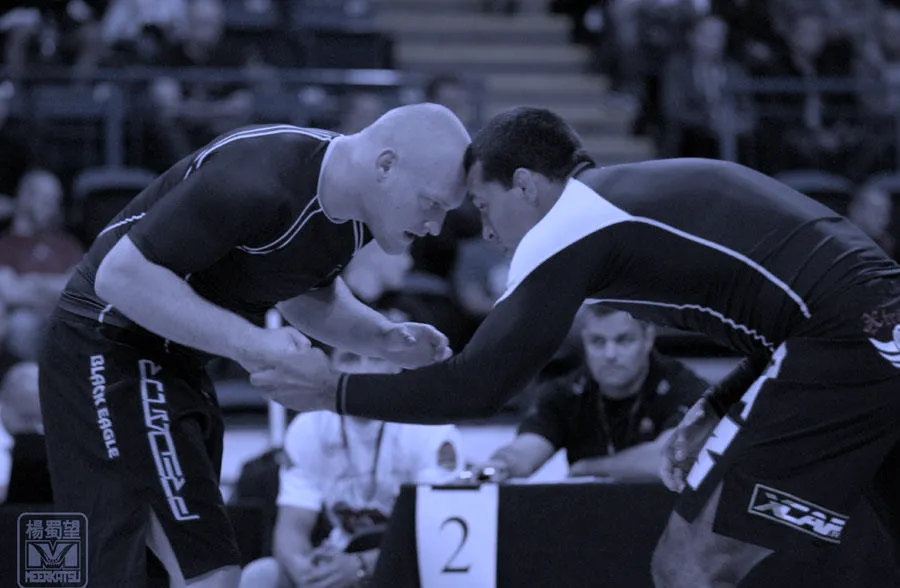
No-gi BJJ is Brazilian Jiu-Jitsu without the traditional gi uniform. You train in shorts and a rash guard. There are no lapels to grab, no sleeves to grip, no collar chokes. Just you, your training partner, and whatever control you can establish with your body.
It sounds like a small change. It isn’t.
Why no-gi feels different
In the gi, you can grab fabric. That slows everything down. You can stall, anchor, and control the pace with your grips. Take those grips away and suddenly the game opens up. Positions change faster. Escapes are easier because there’s less friction. Control is harder because everything is slippery (especially once you’re both sweating).
This means no-gi tends to be more scramble-heavy. You’ll find yourself in transitions and exchanges that simply don’t happen in the gi because nobody can hold on long enough to prevent them. Some people love that chaos. Others prefer the methodical grip-fighting of the gi. Most serious grapplers train both.
How the techniques change
The core of BJJ stays the same in no-gi. You’re still passing guard, escaping mount, hunting submissions. But without fabric to grip, your handles change. Instead of grabbing collars and sleeves, you’re working with:
- Underhooks and overhooks. These become your primary tools for control. Whoever wins the underhook battle usually wins the exchange.
- Wrist control. You can’t grab a sleeve, but you can control a wrist. This sets up a lot of attacks.
- Body locks. Wrapping your arms around your opponent’s torso is one of the most reliable ways to control someone without a gi.
- Head and neck control. Collar ties, front headlocks, and snap downs become much more important standing.
Some submissions become more prominent in no-gi too. Guillotines and front headlock chokes are everywhere because the neck is so much more accessible without a collar in the way. Leg locks, particularly heel hooks, have become a defining feature of modern no-gi grappling. And the rear naked choke from the back remains the single highest-percentage finish.
On the other hand, some gi favourites become harder or impossible. No more cross-collar chokes. No more loop chokes. Spider guard and lasso guard lose most of their power. You’ll naturally gravitate toward guards that don’t rely on grips: butterfly guard, half guard, single leg X, and similar positions.
Why no-gi has blown up
No-gi has always been around, but over the last decade it’s gone from the scrappy cousin of gi BJJ to arguably the more popular format. A few things drove that.
The biggest is ADCC. The Abu Dhabi Combat Club World Championship is the most prestigious no-gi grappling event in the world, and it’s become appointment viewing for the BJJ community. The athletes who compete there (Gordon Ryan, Andre Galvao, Giancarlo Bodoni, to name a few) have become genuine stars in the sport.
MMA helped too. Every UFC fighter trains no-gi grappling. When people watch MMA and get inspired to try grappling, they often start with no-gi because it looks like what they saw on TV.
And honestly, some people just prefer it. No gi to wash. No gi to buy. Show up in shorts and a rash guard and you’re ready to go. There’s something appealing about that simplicity.
No-gi for self-defence
This is a point worth making. In a real-world situation, nobody is wearing a gi. They might be in a t-shirt, a hoodie, or nothing at all. No-gi grappling teaches you to control someone without relying on clothing that might rip, stretch, or not be there in the first place.
That doesn’t mean gi training is useless for self-defence. Far from it. But no-gi forces you to develop control through body positioning and limb isolation rather than fabric grips, and that translates well to situations where you can’t predict what someone will be wearing.
Should you train gi, no-gi, or both?
The honest answer is both, if you can. They complement each other in ways that aren’t obvious until you’ve done it.
Gi training builds patience, grip strength, and technical precision. It forces you to be methodical because your opponent can slow you down with their grips. No-gi builds speed, explosiveness, and adaptability. It forces you to be dynamic because positions change so quickly.
When you train no-gi and then go back to the gi, everything feels easier. You have more tools, more control, more options. And when you train gi and then go to no-gi, your positional awareness and submission mechanics carry over even without the grips.
If you’re brand new to grappling, either is a perfectly fine starting point. Don’t overthink it. Just get on the mats.
What to expect in a no-gi class
If you’ve only trained in the gi, your first no-gi session will feel a bit strange. Everything is faster and more slippery. Positions you could hold comfortably in the gi will feel like trying to control a wet fish.
You’ll wear shorts (without pockets or zippers) and a rash guard. Some people wear spats under their shorts. Bring water. You’ll need it because no-gi tends to be a high-intensity workout.
The class structure is usually similar to a gi class: warm-up, technique drilling, then live rolling. The techniques will focus on no-gi specific grips and controls, and you’ll probably notice the pace picks up significantly during sparring.
Don’t be surprised if you feel like a beginner again, even if you’re experienced in the gi. That’s normal. Your body needs time to adjust to the different grips, the speed, and the fact that your go-to collar choke no longer exists.
No-gi at Costello BJJ
Our head coach Luke Costello competed at the ADCC World Championship, which is the highest level of no-gi grappling competition that exists. He’s also an IBJJF World Champion and 4x European Champion, so he brings depth from both the gi and no-gi sides of the sport.
That combination matters. A lot of no-gi instruction comes from coaches who only train one style. Luke’s background in both means you’re learning no-gi techniques that are informed by a complete understanding of grappling, not just one slice of it. He also holds a judo black belt, which adds another layer to the takedown and clinch work you’ll learn in no-gi.
Our no-gi classes are open to all levels. If you’ve never grappled before, that’s fine. If you’ve been training gi for years and want to add no-gi to your game, even better.
Getting started
If you’re curious about no-gi, the best thing you can do is try a class. Reading about it only gets you so far. The difference between gi and no-gi is something you feel more than you understand intellectually.
Your first class is free. No experience required. Just bring shorts, a t-shirt or rash guard, water, and a willingness to feel a bit lost for an hour. Everyone does at first.
Want to try no-gi grappling in Exeter? Get in touch and we’ll get you on the mats. Costello BJJ is located at Unit 4 Cofton Road, Marsh Barton, Exeter EX2 8QW.